ALL AGRI #Export
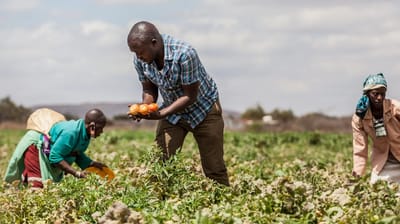
Agriculture accounts for roughly a third of Africa’s GDP and provides a livelihood to more than half the continent’s workforce. Yet for millions of African farmers working the land, the promise of prosperity remains elusive due to stubbornly low crop yields. Nowhere is this challenge more apparent than in cereal farming, which includes the cultivation of key commodities like wheat, rice, maize, barley, oats, rye, millet, sorghum, buckwheat, and mixed grains. According to the Food and Agriculture Organization of the UN (FAO), cereal yields in Africa trail the rest of the world by a notably wide margin. In 2023, the continent’s cereal yields stood at 1.7 tonnes per hectare, which is less than half the global average of 4.24. By contrast, Asia achieved cereal yields per hectare of 4.46 tonnes, behind Europe (4.53), South America (4.69) and North America (6.78).
Read More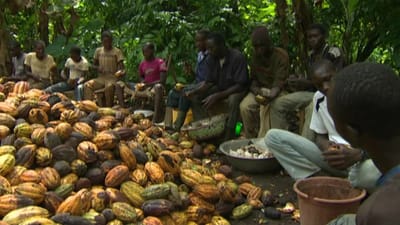
ocoa-leading region coming off two below-average harvests Industry researchers downgrading their earlier 2025/26 forecasts Flower, young pod mortality rates high, despite improved weather
Read More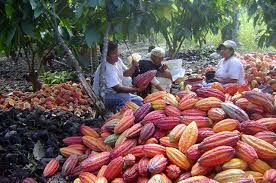
The global cocoa market in 2025 is a study in contradictions: prices hover near $9,500 per ton after peaking at $12,900 in December 2024, yet demand remains stubbornly strong despite the economic headwinds. This paradox underscores a structural transformation in the cocoa supply chain, driven by climate shocks, trade policy turbulence, and a reordering of global demand. For investors, the challenge lies in distinguishing between transient volatility and enduring shifts—while avoiding the pitfalls of overexposure to a market still grappling with its own fragility.
Read More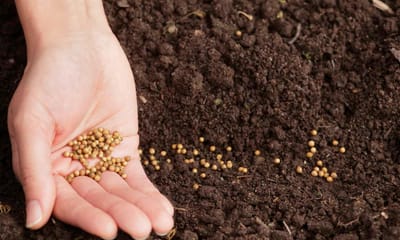
AGRA has been working on seed systems for 20 years developing robust seed business and enabling better policies that support advanced seed systems. AGRA’s impact on Africa’s seed systems is enormous through a significant contribution to the release of 688 crop varieties released and the strengthening of 114 African seed companies. Together with the empowerment of 38,000 Agro dealers, this is supporting 33 million farmers to access high yielding seed.
Read More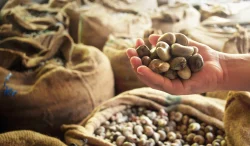
As part of efforts to deepen agricultural cooperation and strengthen food security across Africa, Nigeria has donated 2,000 cashew seedlings and 100,000 cashew seeds to Ethiopia. The donation, sufficient to cultivate approximately 600 hectares of farmland, was formally received by Ethiopia’s Minister of State for Agriculture, Dr Efa Muleta Boru, ahead of the second United Nations (UN) Food Systems Summit to be held in Addis Ababa from July 27 to 29, 2025.Spearheaded under President Bola Tinubu’s agricultural transformation agenda, the green diplomacy initiative reinforces Nigeria’s commitment to leveraging agro-development as a strategic instrument for regional diplomacy and sustainable development.
Read More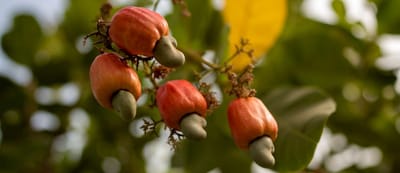
Nigeria is making a strong push to expand its presence in the global cashew market, as exports of the nut reached an impressive $398 million. This growth is particularly significant as cashews are now one of the top agricultural exports for Nigeria, alongside products like cocoa and sesame seeds. The country is positioning itself as a key player in the global cashew trade, with efforts aimed at improving both the quality of its cashew nuts and the value chain from farming to export.
Read More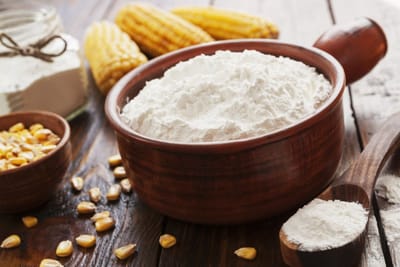
Driven by increasing demand for maize (corn) starch in Africa, the market is expected to continue an upward consumption trend over the next decade. Market performance is forecast to decelerate, expanding with an anticipated CAGR of +1.4% for the period from 2024 to 2035, which is projected to bring the market volume to 4.2M tons by the end of 2035. In value terms, the market is forecast to increase with an anticipated CAGR of +1.7% for the period from 2024 to 2035, which is projected to bring the market value to $3B (in nominal wholesale prices) by the end of 2035.
Read More
Driven by increasing demand for coffee substitutes containing coffee in Africa, the market is expected to continue an upward consumption trend over the next decade. Market performance is forecast to decelerate, expanding with an anticipated CAGR of +1.5% for the period from 2024 to 2035, which is projected to bring the market volume to 239K tons by the end of 2035.
Read More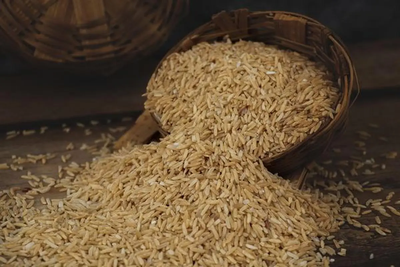
“Rice is very popular because it is easy to cook,” he said. “It used to seem like a luxury food to many consumers, compared with maize and millet. If you go to Sierra Leone, they used to consume a lot of roots and tubers etc, but people now associate those foods with poverty so they prefer rice.”Sali Atanja Ndindeng heads the rice sector development programme, which develops new varieties in conjunction with market trends and analyses samples received from partner institutions in member countries to help identify good grain quality.
Read More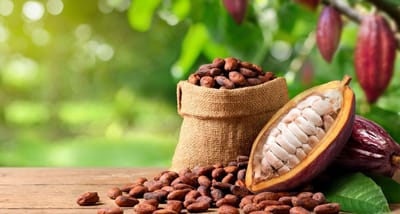
Cocoa prices have seen strength in the past week from concern about dry weather in West Africa that threatens the region's cocoa crops. There has been little to no precipitation over the past few weeks in the cocoa-growing areas of the Ivory Coast and Ghana, which could negatively impact the development of flowers and cherelles on cocoa plants. According to the European Centre for Medium-Range Weather Forecasts, rainfall in the Ivory Coast and Ghana this season remains below the 30-year average, and combined with high temperatures, risks hurting cocoa pod development for the main crop harvest that starts in October.
Read More
Some imported products could become cheaper in the short term as US tariffs take effect and as countries grapple with surplus in products, diversification efforts and competition. South Africa was slapped with a 30% tariff on local goods, which officially took effect on 7 August. The country said it does not plan to retaliate against Washington, but is offering a revised trade deal, which would be mutually beneficial to both nations. South Africa’s trade partners, including China, are also enduring damaging tariffs from the US, while both Brazil and India are being hit with 50% tariffs. Vietnam and Japan are facing a 20% and 15% tariff, respectively.
Read More
MENA's Cocoa Market to Grow at +1.2% CAGR, Reaching 408K Tons by 2035 Index Box has just published a new report: MENA - Chocolate And Other Food Preparations Containing Cocoa - Market Analysis, Forecast, Size, Trends And Insights. The MENA market for chocolate and cocoa-based products is poised for growth, with a projected volume of 408K tons and a value of $1.6B by the end of 2035.
Read More